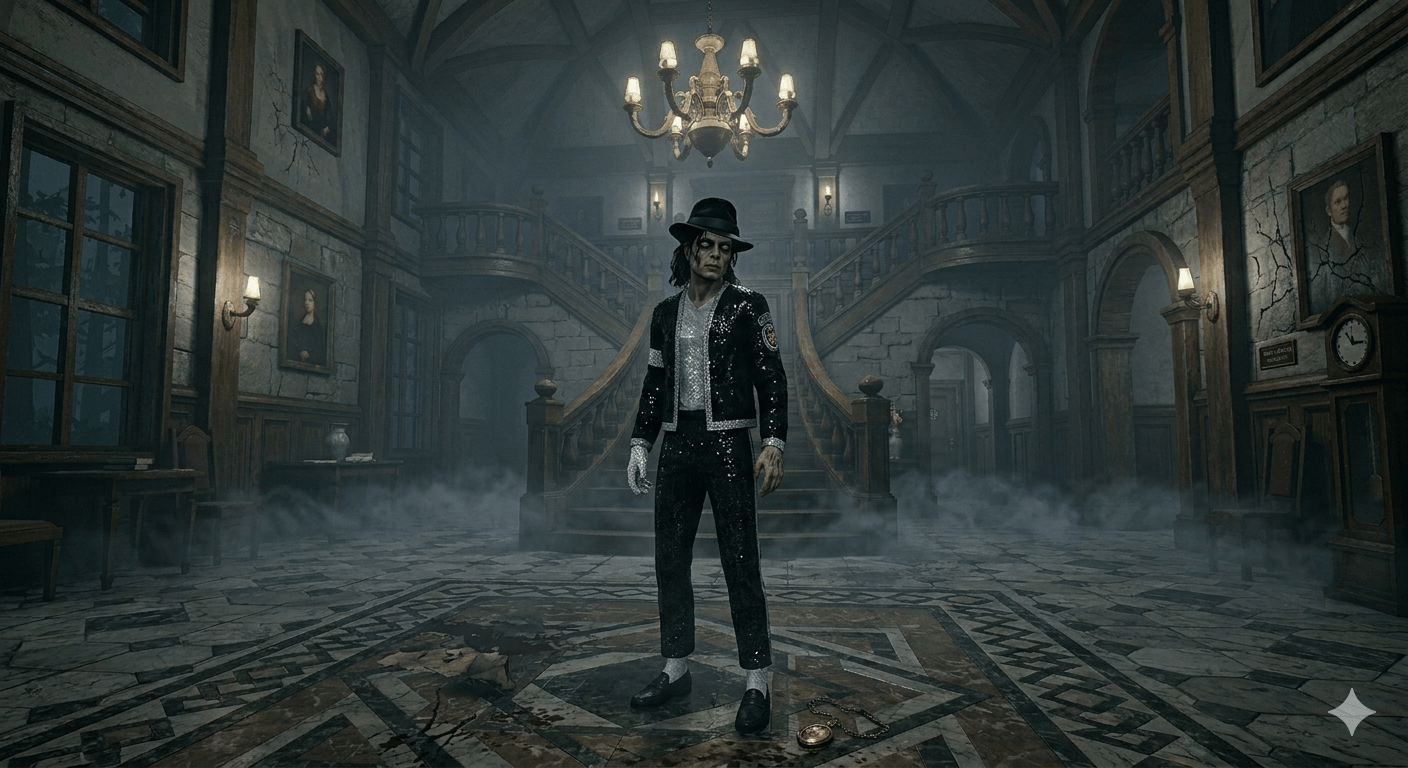
First Electric MiniCooper in Arklay Valley
WHEN THE GRID GOES DARK, BARRY IS STILL ASKING ABOUT THE CHARGING BAY
BREACH
REPORT
047
S.T.A.R.S. logs, Raccoon City absurdism, Banksy on electric bikes, a Mini Cooper in someone’s living room, and why the entire EV future is one tripped fuse away from being very funny
The electric vehicle revolution was supposed to arrive quietly. No exhaust. No noise. Just a soft hum, a green icon on a dashboard, and a future that charged overnight while you slept. What actually arrived was: a man locked inside a CyberTruck on Broad Street writing forum posts to strangers, a fire engine at 28% battery, a pharmaceutical company pretending its router was down, and Barry Burton asking if anyone knew whether the EV charging bay near the Umbrella plant was working. This is that story. It is also several other stories, because Raccoon City contained multitudes, most of them fatal, and a surprising number of them comedic.
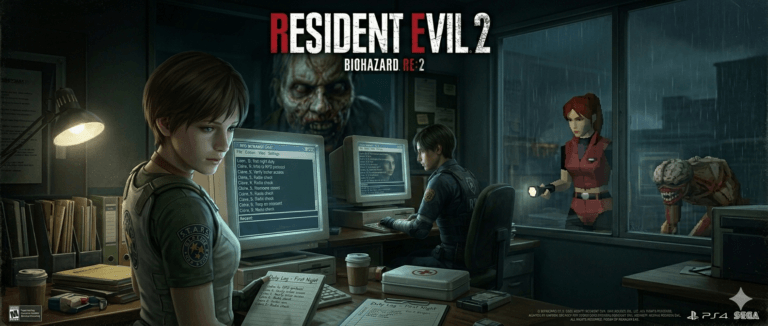
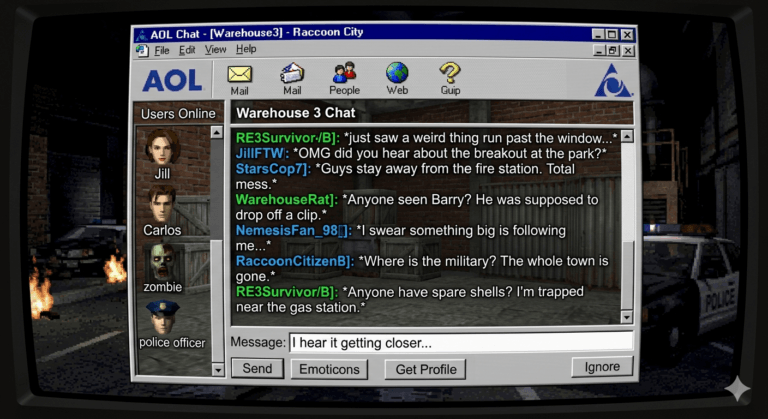
We have recovered, through methods that remain classified under the Freedom of Information Act (Raccoon City municipal annex, 1997 amendment), the complete S.T.A.R.S. operational chat logs from September 28, 1998. What follows is a selection. Not the classified parts. The other parts. The parts where Rebecca Chambers corrects everyone’s spelling and Barry Burton asks about the charging bay twelve minutes before everything collapses.
The following logs were extracted from the Raccoon City Police Department secure server backup, discovered on a Zip disk in a drawer marked DO NOT OPEN — WESKER. They have not been edited for content, spelling, or dignity.
Meanwhile, four thousand miles from Raccoon City, in a different city with its own relationship to crumbling infrastructure and ambitious public transport promises, someone painted a stencil on the south tower of Tower Bridge. The figure in the stencil was riding an electric bike. The electric bike was plugged into the bridge itself via an extension cord. Below it, in Banksy’s signature distressed block lettering: THE FUTURE IS ELECTRIC AND THE SOCKET IS 40 FEET UP.
London had been cycling through its own version of the EV conversation. The city’s electric bike share scheme, launched with considerable fanfare in 1996, had accumulated a fleet of two hundred bikes, three hundred and twelve charging docks, and approximately forty-four working charging docks, because the other two hundred and sixty-eight had been either stolen, vandalised, hit by taxis, or — in one documented case near Waterloo — used as an impromptu barbecue stand by someone who had very correctly identified that the heat generated by a short-circuiting charging dock was more than sufficient to grill a sausage.
The Tower Bridge electric bike situation was, in the estimation of Transport for London’s internal communications (later leaked), “not ideal but also not technically our fault.” The bikes were fine. The riders were enthusiastic. The infrastructure was aspirational. This is the consistent grammar of the electric future in 1998: the vehicles work, the people want them, and the socket is forty feet up.
The Electric Mini Cooper in the apartment is both a footnote and a thesis statement. Derek Hollis, aged 31, a software contractor whose company was digitising the Raccoon City municipal infrastructure database (irony: maximum), had purchased an original-run Electric Mini Cooper in August 1998. The vehicle was genuinely excellent. It was also impossible to charge, because Derek lived on the fourth floor of a building whose basement car park had a single standard 13-amp socket, already occupied by Mr. Petrov from flat 2A who had been running an extension cord to it for three years to power a chest freezer he used for storing competitive-fisherman-grade bait.
Derek’s solution — which he documented in a remarkably cheerful forum post on RaccoonCity.net under the username MINI_EV_DEREK — was to roll the Mini Cooper into the lift, bring it to the fourth floor, and charge it in the living room overnight using three daisy-chained extension leads. This worked, in the sense that it did charge the car. It did not work in the sense that it tripped the building’s fuse box at 3am, cutting power to the entire east wing including Mr. Petrov’s bait freezer, causing a diplomatic incident of the sort that only apartment buildings can generate, involving a handwritten note slid under four doors and a conversation in the hallway that Derek described on the forum as “technically civil but emotionally quite loud.”
The Mini Cooper remained in the living room for eleven days. Derek reported that guests found it “surprisingly not that weird after the first hour” and that it made an excellent place to sit during parties. A Raccoon City Fire Brigade inspector who visited following Mr. Petrov’s formal complaint photographed the setup and filed it under creative problem-solving (inadvisable) in the brigade’s annual training materials. The photo is still used today in fire safety courses across the Midwest under the heading: DO NOT DO THIS.
There is a version of the electric vehicle story that is purely technical and purely serious: battery chemistry, grid infrastructure, charging standards, kilowatt-hours per hundred kilometres, the carbon mathematics of the transition. That version is important. People write it well. EVSUNRISE.COM has published it, in various registers, across every article in this archive.
But there is also this version. The one where Barry Burton cannot stop thinking about the charging bay. Where Rebecca Chambers is eighteen years old and filing corrections at documentary filmmakers from a police precinct terminal. Where Derek from flat 4B has rolled his car into the lift and is currently sitting in it in his living room, reading the forum post that John from the locked CyberTruck is writing from Broad Street, and both of them are having approximately the same experience of the electric future: it’s real, it works, and the infrastructure is forty feet up and also Mr. Petrov is extremely unhappy.
Banksy spray-painted a rat riding an electric bike on the Raccoon City precinct wall the summer before the outbreak. The rat was wearing a tiny hard hat and a high-visibility vest. Below it: THE WORKERS OF THE WORLD ARE ALREADY DOING THIS. MANAGEMENT IS STILL ON A PLANNING CALL. The stencil was painted over by the city council two weeks later. The EV charging bay that had been promised for the precinct car park was still listed as under consideration in the October 1999 budget report, which nobody read because by then there was no Raccoon City.
The electric future arrived. It just arrived in pieces, on different schedules, with incompatible plug standards, in cities that had forgotten to run the conduit. It arrived in flat 4B at 44% charge and an angry neighbour. It arrived on Tower Bridge at the end of a very long extension cord. It arrived at the Arklay Service Station as two hash marks on masking tape. It arrived in the S.T.A.R.S. chat as Barry asking about the charging bay one more time, at 19:46, thirteen minutes before everything else stopped mattering.
The charging bay, for the record, was fine. Barry would have made it. The rest of it was a different problem entirely.