Arklay Valley Charging Station SEPT 28 1998
THE LAST
TANK OF GAS
IN ARKLAY
A first-person account from the Arklay Valley service station on the night the valley went dark — written from the plastic chair beside the electric charger that nobody ever used

The EV charger at the Arklay Valley Service Station had been installed in March. By September it had been used twice. I know because Eddie the night attendant kept a tally on a strip of masking tape stuck to the cash register: two hash marks, faded to almost nothing. I was looking at those marks at around eight in the evening when the first police cruiser went past without stopping, heading north toward the valley at a speed that made the forecourt display signs rattle in their brackets.
I’d stopped for gas. That’s the honest beginning of it. I’d ridden from the city on a motorcycle that had been running on ambition and a quarter-tank since the industrial district, and the Arklay Service Station was the last pump before the road climbed into the forest and the valley opened up. I needed gas. I needed to call my brother. The payphone by the air hose was the reason I’d chosen this particular station over the cheaper one back at the junction. I had a pocket full of quarters and a very specific anxiety about someone I hadn’t spoken to in three months.
The payphone was out of order. A hand-written sign said: OUT OF ORDER SINCE AUG 14 SORRY. Eddie, behind the counter, shrugged with the particular eloquence of someone who had given up apologising for things he couldn’t fix. So I bought a coffee from a machine that produced something dark and hot and technically caffeinated, and I sat in the plastic chair beside the EV charger — the one piece of furniture in the forecourt — and I waited for some other plan to present itself.
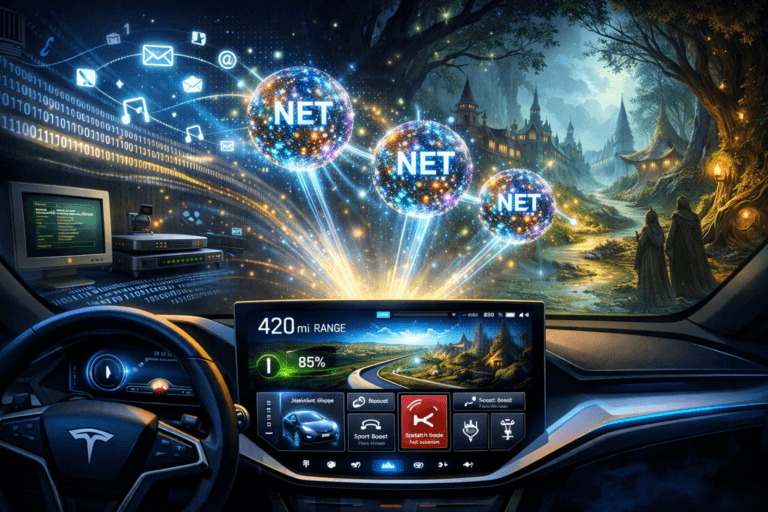
The EV charger was a CityCharge Model 3 — one of the first municipal rollout units, installed as part of Raccoon City’s infrastructure modernisation programme. It had a small screen that showed the city grid status, charge availability at other stations in the network, and a message board that operators could update remotely. On the night of September 28, the message board said: WELCOME TO THE ELECTRIC FUTURE — RACCOON CITY IS GOING GREEN. The screen’s cool blue light was the only thing on the forecourt that wasn’t amber or the colour of old rubber. I remember staring at it while I drank the coffee. Welcome to the electric future. The message would stay up for three more days before the grid went dark and nobody was around to update it.
I’d been following the EV story loosely — not as an enthusiast, but because my brother had mentioned it in one of our last conversations before we stopped talking. He was working at something he wasn’t allowed to describe in detail, somewhere in the valley, and he’d mentioned the new electric vehicle infrastructure as a kind of proof that things were going to be fine. That the city was building toward something. That the future was arriving on schedule. I remember thinking it was an odd thing to reassure someone with. The electric charger at the Arklay Service Station had two customers in six months, and the payphone next to it hadn’t worked since August.
Eddie had a transistor radio on the counter tuned to the Raccoon City police scanner — the kind of thing that gas station attendants kept partly for entertainment and partly because it gave thirty seconds of warning before anything important happened on the road. At about twenty past eight, the scanner started talking about an animal attack on Ennerdale Street. Eddie turned the volume up without looking away from the magazine he was reading, a muscle memory reflex. I moved my plastic chair closer to the door.
The description that came through was unusual. The dispatcher said aggressor not responding to commands and then there was a burst of static and a second voice that said something I couldn’t hear. Eddie looked up from his magazine. He had been a night attendant at this station for eleven years and he understood the rhythm of police radio the way musicians understand tempo. Something in the rhythm was wrong. He reached under the counter and turned the external pumps off, a precaution, a habit from the armoured robbery two summers before. I didn’t ask him to explain it. The grammar of the situation was clear enough.
I have thought many times about what I knew and when I knew it, sitting in that plastic chair at the Arklay Service Station on the night of September 28. The honest answer is that I knew something was wrong before I had any reason to know it specifically. The police cruisers going north without stopping. The radio traffic changing tone. The EV grid map going grey sector by sector. My brother, working somewhere in the valley, not answering. All of these things were data points that individually could have had a hundred explanations. Together, in the specific sequence in which they arrived over the two and a half hours I spent on that forecourt, they constituted a single, legible sentence that I was not yet willing to read aloud.
What strikes me now, looking back, is how much the electric charger was the centre of the scene. Not because it did anything, but because it was the one thing that was still functioning normally and broadcasting information. While the payphone was dead and the radio was becoming less decipherable and Eddie had turned the pumps off and locked the cash drawer, the CityCharge Model 3 was diligently updating its screen with grid status data. At 21:14 it showed only two active nodes in the entire Arklay sector. At 21:44, the last one went grey and the screen reverted to its default message. Welcome to the electric future. Raccoon City is going green.
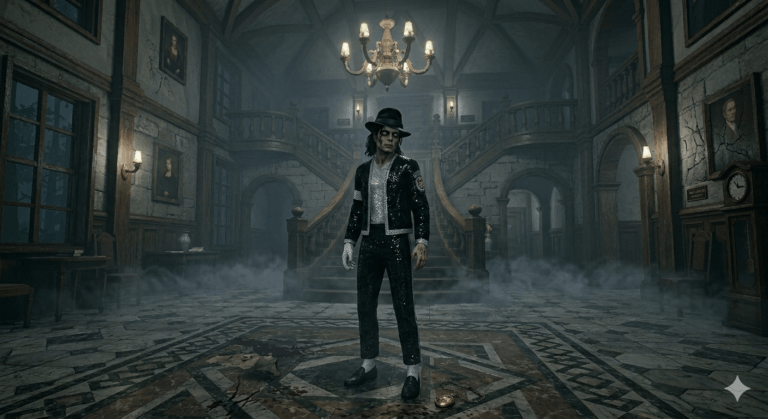
I had my motorcycle. I had a full tank of the last petrol that would ever matter to me in Arklay Valley. I had a white bomber jacket that was too light for September in the mountains, a Vietnam boonie hat that I’d had since I was sixteen, and a coffee that had gone cold in a paper cup. I left the cup on the plastic chair and I started the bike and I rode north, into the valley, toward the last known location of my brother, with the EV charger’s blue light shrinking in my mirrors and the radio silence of the Raccoon City grid pressing down on everything like weather.
The masking tape on the cash register said two customers. I was the third. Eddie logged me out at 21:52. I don’t know if Eddie made it. I never went back to find out. That is the one piece of information I have deliberately chosen not to recover, and I think about it every time I see an electric charger installed somewhere new, its screen glowing that same particular shade of civic blue, telling me that the future is arriving on schedule.
This account was recovered from a personal journal submitted to the Raccoon City federal archive in 1999. The Arklay Valley Service Station was destroyed in the October containment operation. The CityCharge Model 3 unit was recovered intact. Its screen still displayed the default welcome message when federal investigators arrived on October 4th. The unit is currently held as evidence, case number RC-1998-0928. Eddie Kowalczyk, night attendant, was confirmed among the survivors extracted from the Raccoon City perimeter on October 2nd. He now lives in Portland. He no longer works nights.